
Provided by Feat · Verify: verify.json · tools.json

World Bank Group (WBG) Mozambique: Country Partnership Framework (CPF) 2023-2027 Concept Note Summary Public Version Maputo, May 2022

3/1/2022

CPF 2023-2027. Public Version. Maputo, May 2022.

1

World Bank Group (WBG)Mozambique: Country Partnership Framework (CPF) 2023-2027Concept Note SummaryPublic VersionMaputo, May 2022

CPF 2023-2027. Public Version. Maputo, May 2022.

Introduction: What is the CPF, why the consultations and what are the expectations

The Country-Mozambique Partnership Framework (CPF) is the guiding instrument of the World Bank Group's (WBG) support, including IFC and MIGA, to Mozambique in pursuit of its development objectives.

The CPF sets out the objectives and expected results of the partnership between the WBG and the government of Mozambique over a period of time (4-5 years).

The CPF is based on the following elements: (i) The priorities defined by the country's development plans (PQG, ENDE, etc); (ii) A World Bank Systematic Country Diagnostic (SCD), other analyzes and knowledge produced; (iii) lessons learned from the implementation of previous strategies (CLR) and the World Bank's comparative advantages.

The focus of the WBG's work is the elimination of extreme poverty and the reduction of inequality.

Currently, the WBG is preparing an updated CPF covering the period Fiscal Year 23-27.

The new CPF sets out the preliminary aspirations and objectives for the partnership with Mozambique over the next 5 years.

This document presents a summary of the CPF’s concept note with the aim of obtaining inputs around the following issues:

Deepening the discussion of each pillar of the strategy and its objectives.

Definition of priorities, and instruments (including funding), considering the specific development context and challenges.

Definition of CPF monitoring mechanisms (indicators)

CPF 2023-2027. Public Version. Maputo, May 2022.

3/1/2022

Introduction: What is the CPF, why the consultations and what are the expectations

The Country-Mozambique Partnership Framework (CPF) is the guiding instrument of the World Bank Group's (WBG) support, including IFC and MIGA, to Mozambique in pursuit of its development objectives.

The CPF sets out the objectives and expected results of the partnership between the WBG and the government of Mozambique over a period of time (4-5 years).

The CPF is based on the following elements: (i) The priorities defined by the country's development plans (PQG, ENDE, etc); (ii) A World Bank Systematic Country Diagnostic (SCD), other analyzes and knowledge produced; (iii) lessons learned from the implementation of previous strategies (CLR) and the World Bank's comparative advantages.

The focus of the WBG's work is the elimination of extreme poverty and the reduction of inequality.

Currently, the WBG is preparing an updated CPF covering the period Fiscal Year 23-27.

The new CPF sets out the preliminary aspirations and objectives for the partnership with Mozambique over the next 5 years.

This document presents a summary of the CPF’s concept note with the aim of obtaining inputs around the following issues:

Deepening the discussion of each pillar of the strategy and its objectives.

Definition of priorities, and instruments (including funding), considering the specific development context and challenges.

Definition of CPF monitoring mechanisms (indicators)

CPF 2023-2027. Public Version. Maputo, May 2022.

Presentation structure

World Bank Group's view on the country's main strategic challenges Main lessons from the previous CPF (2017-2021) Initial Proposal for CPF 2023-2027

CPF 2023-2027. Public Version. Maputo, May 2022.

3/1/2022

Presentation structure

World Bank Group's view on the country's main strategic challenges Main lessons from the previous CPF (2017-2021) Initial Proposal for CPF 2023-2027

CPF 2023-2027. Public Version. Maputo, May 2022.

Presentation structure

World Bank Group's view on the country's main strategic challenges Main lessons from the previous CPF (2017-2021) Initial Proposal for CPF 2023-2027

CPF 2023-2027. Public Version. Maputo, May 2022.

3/1/2022

Presentation structure

World Bank Group's view on the country's main strategic challengesMain lessons from the previous CPF (2017-2021) Initial Proposal for CPF 2023-2027

CPF 2023-2027. Public Version. Maputo, May 2022.

Country Context: Development Challanges and Opportunities

Development context. Mozambique is still a Low-Income Country (LIC) despite its vast natural resources and favorable location. Most of the population lives in extreme poverty, inequality is high, the Human Capital Index is among the lowest in the world and fertility rates are comparatively high.

These development challenges are compounded by structural fragility and high exposure to climate and health risks – including most recently two major cyclones in 2019, the Covid-19 pandemic.

Structural fragility. Mozambique's deeply rooted fragility stems from the weakness of its institutions, which goes back to historical and geographical causes, and has manifested itself in recurring cycles of conflict and violence. Inequality and poverty reinforce and are reinforce by fragility. The insurrection in Cabo Delgado is the most recent manifestation of this fragility.

CPF 2023-2027. Public Version. Maputo, May 2022.

3/1/2022

Country Context:Development Challanges and Opportunities

Development context. Mozambique is still a Low-Income Country (LIC) despite its vast natural resources and favorable location.Most of the population lives in extreme poverty, inequality is high, the Human Capital Index is among the lowest in the world and fertility rates are comparatively high.

These development challenges are compounded by structural fragility and high exposure to climate and health risks – including most recently two major cyclones in 2019, the Covid-19 pandemic.

Structural fragility.Mozambique's deeply rooted fragility stems from the weakness of its institutions, which goes back to historical and geographical causes, and has manifested itself in recurring cycles of conflict and violence. Inequality and poverty reinforce and are reinforce by fragility. The insurrection in Cabo Delgado is the most recent manifestation of this fragility.

CPF 2023-2027. Public Version. Maputo, May 2022.

Country Context: Development Challanges and Opportunities

Very limited economic and spatial transformation in recent decades. Until 2019, about 70.1% of the workforce still worked in agriculture (subsistence). Spatial transformation has increased recently, but around 60% of the population still lives in rural areas – indicating a slow migration process despite the significant rural-urban income gap.

The advent of natural gas brings an opportunity for economic transformation, but it will not be automatic. Real GDP could be 1.63 times higher by 2033 in an optimistic scenario, and even with the delay in the implementation of the Mamba project, real GDP would be 60% higher than without LNG production. This brings GDP per capita to almost USD 1,000 by 2033 (from USD 485 estimated for 2020).

CPF 2023-2027. Public Version. Maputo, May 2022.

3/1/2022

Country Context: Development Challanges and Opportunities

Very limited economic and spatial transformation in recent decades. Until 2019, about 70.1% of the workforce still worked in agriculture (subsistence). Spatial transformation has increased recently, but around 60% of the population still lives in rural areas – indicating a slow migration process despite the significant rural-urban income gap.

The advent of natural gas brings an opportunity for economic transformation, but it will not be automatic.Real GDP could be 1.63 times higher by 2033 in an optimistic scenario, and even with the delay in the implementation of the Mamba project, real GDP would be 60% higher than without LNG production. This brings GDP per capita to almost USD 1,000 by 2033 (from USD 485 estimated for 2020).

CPF 2023-2027. Public Version. Maputo, May 2022.

Country Context: Development Challenges and Opportunities

Recent Economic Developments. The short-term macroeconomic situation is stable, but growth has stagnated in recent years. The country has a high risk of debt distress, but the debt is assessed as sustainable in a forward-looking sense, taking into account potential LNG revenues.

Medium and long-term growth prospects are positive but subject to considerable risks, including a new wave of Covid-19; new climatic shocks, the resurgence of conflict in the North and the effects of the war in Ukraine.

Macroeconomic risks and impact on poverty are considerable (inflation, interest rate, fiscal pressure and increase in the trade balance deficit). Impacts on poverty will be direct (food and fuel prices) and indirect (creation of employment), but they are expected to have different effects on urban and rural areas and on different levels of poverty.

CPF 2023-2027. Public Version. Maputo, May 2022.
3/1/2022

Country Context: Development Challenges and Opportunities

Recent Economic Developments.The short-term macroeconomic situation is stable, but growth has stagnated in recent years. The country has a high risk of debt distress, but the debt is assessed as sustainable in a forward-looking sense, taking into account potential LNG revenues.

Medium and long-term growth prospects are positive but subject to considerable risks, including a new wave of Covid-19; new climatic shocks, the resurgence of conflict in the North and the effects of the war in Ukraine.

Macroeconomic risks and impact on poverty are considerable(inflation, interest rate, fiscal pressure and increase in the trade balance deficit). Impacts on poverty will be direct (food and fuel prices) and indirect (creation of employment), but they are expected to have different effects on urban and rural areas and on different levels of poverty.

CPF 2023-2027. Public Version. Maputo, May 2022.

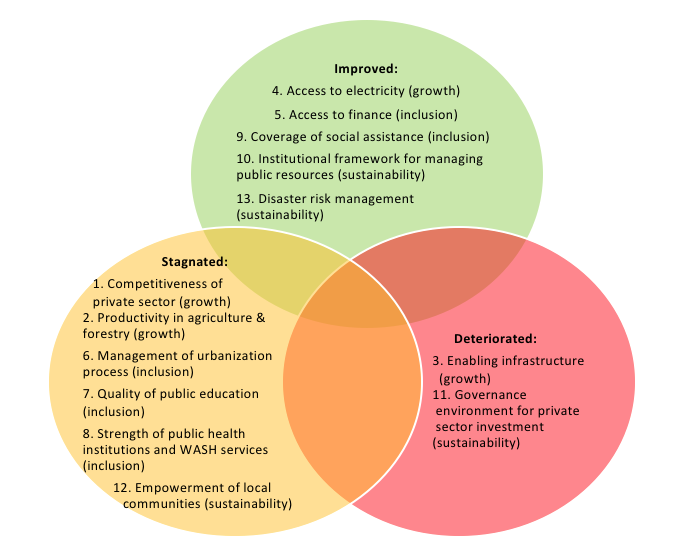
World Bank Systematic Country Diagnostic (SCD) and Recommendations- Summary

The Mozambique SCD Update concluded that, overall, the country's main challenges remain unchanged from the previous diagnosis (2016).

To accelerate development, Mozambique needs to transition to a more inclusive, sustainable and resilient development path (GRID).

Accelerated growth is important, but there is a need to review the model to make it more inclusive. This will require accelerated structural transformation, greater and better investment in its population and a reform of central institutions to improve government efficiency and governance -- improving the country's response to climate and health risks and the prevention of conflict and violence.

Reforms and policies needed to achieve these goals were identified in the SCD Update on recent WBG studies.

World Bank Systematic Country Diagnostic (SCD) according to objectives identified in 2016

CPF 2023-2027. Public Version. Maputo, May 2022.

3/1/2022

World Bank Systematic Country Diagnostic (SCD) and Recommendations- Summary

The Mozambique SCD Update concluded that, overall, the country's main challenges remain unchanged from the previous diagnosis (2016).

To accelerate development, Mozambique needs to transition to a more inclusive, sustainable and resilient development path (GRID).

Accelerated growth is important, but there is a need to review the model to make it more inclusive. This will require accelerated structural transformation, greater and better investment in its population and a reform of central institutions to improve government efficiency and governance -- improving the country's response to climate and health risks and the prevention of conflict and violence.

Reforms and policies needed to achieve these goals were identified in the SCD Update on recent WBG studies.

World Bank Systematic Country Diagnostic (SCD) according to objectives identified in 2016

CPF 2023-2027. Public Version. Maputo, May 2022.

Presentation structure

World Bank Group's view on the country's main strategic challenges Main lessons from the previous CPF (2017-2021) Initial Proposal for CPF 2023-2027

CPF 2023-2027. Public Version. Maputo, May 2022.

3/1/2022

Presentation structure

World Bank Group's view on the country's main strategic challengesMain lessons from the previous CPF (2017-2021)Initial Proposal for CPF 2023-2027

CPF 2023-2027. Public Version. Maputo, May 2022.
CPF AF2017-2021: Main Features

A context in which the rapid growth of previous years had ended. Understanding that the impact of growth on poverty reduction had been less than necessary.

Hidden debt shock reduced confidence in the country, reducing investments.

CPF AF17-FY21 had the overall objective of helping Mozambique “achieve inclusive growth through promoting employment and improving productivity in a sustainable way”.

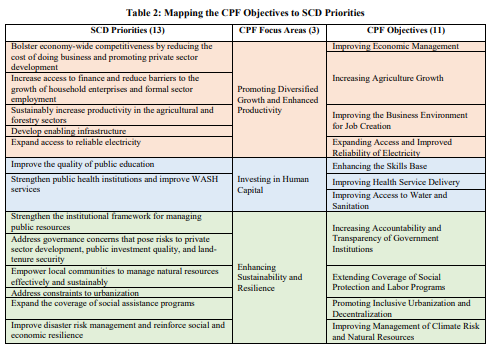
The program had 3 focus areas: (i) Promoting Diversified Growth and Enhanced Productivity, (ii) Investing in Human Capital, and (iii) Strengthening Sustainability and Resilience.

The World Bank's portfolio grew from US$1.6 billion upfront to about US$2.9 billion committed over the entire CPF period.

Additionally: US$700 million for the prevention of conflict and violence (AF 2022) through the

IFC and MIGA investments in the private sector focused on transformative projects for job creation and poverty reduction.

CPF 2023-2027. Public Version. Maputo, May 2022.

3/1/2022

CPF AF2017-2021: Main Features

A context in which the rapid growth of previous years had ended. Understanding that the impact of growth on poverty reduction had been less than necessary.

Hidden debt shock reduced confidence in the country, reducing investments.

CPF AF17-FY21 had the overall objective of helping Mozambique “achieve inclusive growth through promoting employment and improving productivity in a sustainable way”.

The program had 3 focus areas: (i) Promoting Diversified Growth and Enhanced Productivity, (ii) Investing in Human Capital, and (iii) Strengthening Sustainability and Resilience.

The World Bank's portfolio grew from US$1.6 billion upfront to about US$2.9 billion committed over the entire CPF period.

Additionally: US$700 million for the prevention of conflict and violence (AF 2022) through the

IFC and MIGA investments in the private sector focused on transformative projects for job creation and poverty reduction.

CPF 2023-2027. Public Version. Maputo, May 2022.

CPF AF2017-2021: Main Features

Focus on regions and sectors where the poor are concentrated.

Subsistence farming operations should increase from 6% in the previous CPF to 20%

Around 30% of the portfolio went to agriculture and rural areas (compared to 6% in the previous cycle)

A large part of the resources was dedicated to investments in infrastructure, especially in rural and post-cyclone reconstruction.

Adoption of an integrative approach, aggregating investments in infrastructure and social protection.

Prioritization of responses to Cabo Delgado (FY 2022).

Focus on improving macroeconomic management capacity, particularly debt management, fiscal risks and public investment.

The previous CPF gave great priority to studies that would allow a better understanding of the country's challenges, such as the Country's Private Sector Diagnosis, the Country Economic Memorandum, the Urban Review and the Rural Income Diagnosis, among others.

A study on the impacts of climate change (CCDR), an update of the poverty study (Poverty Assessment) and a detailed analysis of the gender issue (Gender Assessment) are in progress.

Final Allocation

CPF 2023-2027. Public Version. Maputo, May 2022.

3/1/2022

CPF AF2017-2021: Main Features

Focus on regions and sectors where the poor are concentrated.

Subsistence farming operations should increase from 6% in the previous CPF to 20%

Around 30% of the portfolio went to agriculture and rural areas (compared to 6% in the previous cycle)

A large part of the resources was dedicated to investments in infrastructure, especially in rural and post-cyclone reconstruction.

Adoption of an integrative approach, aggregating investments in infrastructure and social protection.

Prioritization of responses to Cabo Delgado (FY 2022).

Focus on improving macroeconomic management capacity, particularly debt management, fiscal risks and public investment.

The previous CPF gave great priority to studies that would allow a better understanding of the country's challenges, such as the Country's Private Sector Diagnosis, the Country Economic Memorandum, the Urban Review and the Rural Income Diagnosis, among others.

A study on the impacts of climate change (CCDR), an update of the poverty study (Poverty Assessment) and a detailed analysis of the gender issue (Gender Assessment) are in progress.

Final Allocation

CPF 2023-2027. Public Version. Maputo, May 2022.

CPF AF2017-2021: Results

The CPF - AF17-AF21 was prepared and implemented in an adverse economic context. However, implementation was moderately satisfactory.

CPF reached 100% one of its nine Strategic Objectives (SO); six were mostly hit, and two were "partially hit".

Focus Area /Strategic ObjectiveClassification
Focus Area 1:Promote diversified growth and enhanced productivity – Moderately Satisfactory
Objective 1: Improved economic managementMostly achieved
Objective 2: Increase in Agricultural Income and Increase in Land SecurityMostly achieved
Objective 3: Improve the Business Environment for Job CreationPartially achieved
Objective 4: Expand Access and Improve Electricity ReliabilityAchieved
Focus Area 2:Investing in Human Capital – Moderately Satisfactory
Objective 5: Improve the Competency BaseMostly acheived
Objective 6: Improve Health Service DeliveryMostly acheived
Objective 7: Improve Access to Water and SanitationMostly achieved
Focus Area 3:Strengthening Sustainability and Resilience - Moderately Satisfactory
Objective 8: Support for Recovery and ResilienceMostly achieved
Objective9: Promote Inclusive Urbanization and DecentralizationPartially achieved

The classification of objectives follows the category of “achieved”, “mostly achieved”, and “partially achieved”, and “not achieved”, depending on the level of achievement of indicators and the existence of qualitative evidence.

CPF 2023-2027. Public Version. Maputo, May 2022.

3/1/2022

CPF AF2017-2021: Results

The CPF - AF17-AF21 was prepared and implemented in an adverse economic context. However, implementation wasmoderately satisfactory.

CPF reached 100% one of its nine Strategic Objectives (SO); six were mostly hit, and two were "partially hit".

The classification of objectives follows the category of “achieved”, “mostly achieved”, and “partially achieved”, and “not achieved”, depending on the level of achievement of indicators and the existence of qualitative evidence.

CPF 2023-2027. Public Version. Maputo, May 2022.

Focus Area /Strategic ObjectiveClassification
Focus Area 1:Promote diversified growth and enhanced productivity – Moderately Satisfactory
Objective 1: Improved economic managementMostly achieved
Objective 2: Increase in Agricultural Income and Increase in Land SecurityMostly achieved
Objective 3: Improve the Business Environment for Job CreationPartially achieved
Objective 4: Expand Access and Improve Electricity ReliabilityAchieved
Focus Area 2:Investing in Human Capital – Moderately Satisfactory
Objective 5: Improve the Competency BaseMostly acheived
Objective 6: Improve Health Service DeliveryMostly acheived
Objective 7: Improve Access to Water and SanitationMostly achieved
Focus Area 3:Strengthening Sustainability and Resilience - Moderately Satisfactory
Objective 8: Support for Recovery and ResilienceMostly achieved
Objective9: Promote Inclusive Urbanization and DecentralizationPartially achieved

CPF FY2017-2021: Lessons Learned

Importance of a solid alignment with the Government's objectives, the use of additional resources, the use of a series of financing instruments and others (extra financing).

Flexibility to quickly adjust the program to changing realities and new government priorities.

Continued support for crisis response, preparedness, and prevention evidenced by the previous CPF focus on recovery and resilience – in which the WBG leveraged its technical expertise and resource mobilization power to increase response capacities and invest in prevention . 

Poverty and agriculture. While support for agricultural productivity and rural development represents up to 30 percent of the WB's overall financial allocation, support for agricultural productivity and rural development appears to have contributed only marginally to the increase in aggregate agricultural productivity and, thereby, to poverty reduction.

A renewed focus on institutional strengthening and economic reforms could increase the impact of the future CPF, which would involve bringing back budget support operations combined with technical assistance and studies - complemented with other funding instruments when needed.

CPF 2023-2027. Public Version. Maputo, May 2022.

3/1/2022

CPF FY2017-2021: Lessons Learned

Importance of a solid alignment with the Government's objectives,the use of additional resources, the use of a series of financing instruments and others (extra financing).

Flexibilityto quickly adjust the program to changing realities and new government priorities.

Continued support for crisis response,preparedness, and prevention evidenced by the previous CPF focus on recovery and resilience – in which the WBG leveraged its technical expertise and resource mobilization power to increase response capacities and invest in prevention .

Poverty and agriculture.While support for agricultural productivity and rural development represents up to 30 percent of the WB's overall financial allocation, support for agricultural productivity and rural development appears to have contributed only marginally to the increase in aggregate agricultural productivity and, thereby,topoverty reduction.

A renewed focus on institutional strengthening and economic reformscould increase the impact of the future CPF, which would involve bringing back budget support operations combined with technical assistance and studies - complemented with other funding instruments when needed.

CPF 2023-2027. Public Version. Maputo, May 2022.

Presentation structure

World Bank Group's view on the country's main strategic challenges Main lessons from the previous CPF (2017-2021)

Initial Proposal for CPF 2023-2027

CPF 2023-2027. Public Version. Maputo, May 2022.
3/1/2022

Presentation structure

World Bank Group's view on the country's main strategic challenges Main lessons from the previous CPF (2017-2021)

Initial Proposal for CPF 2023-2027

CPF 2023-2027. Public Version. Maputo, May 2022.
Government Program and Medium-Term Strategy (1-2)

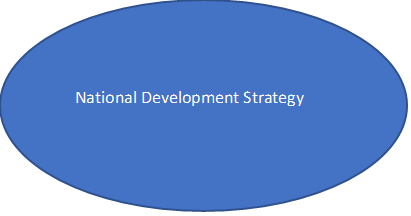
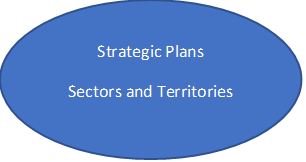
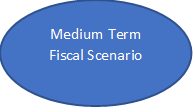
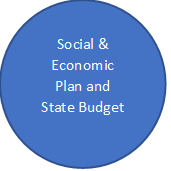
The Government of Mozambique has been preparing a National Development Strategy (ENDE) for 2015-2030. Following the framework defined in this strategy, the government subsequently defines sectoral and territorial development plans; the corresponding five-year plans; the medium-term fiscal scenario and the social, economic and state budget plan.

END: 2022-2042. Vision: "Raising the population's standard of living through the structural transformation of the economy, from a primary economy to an industrialized and services economy" New proposed focus areas: (i) economic transformation, (ii) social transformation, (iii) governance, and (iv) environment and circular economy.

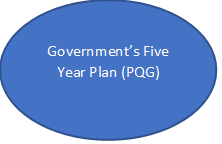
The Government's Five-Year Program (PQG) 2020-2024 will continue to be the main guide for government interventions and strategies in 2023-24. A new PQG is expected to be developed after the 2024 national elections. The Government has developed a Conflict and Violence Prevention Strategy as part of the process to ensure eligibility for the Prevention and Resilience Allocation (PRA, Prevention and Resilience Allocation). ) under the IDA19.

The Government also has a robust strategy for the energy sector. The Energy Strategy for the period 2015-2024 aims to: (i) Increase infrastructure and energy production for local markets and energy exports (gas and electricity). (ii) Expand local access to electricity from 25 percent in 2015 to 62 percent by the end of 2024, which should provide a major boost to the country's economic and social development.

The Government approved the National Climate Change Adaptation and Mitigation Strategy, which provides the overall policy framework to guide climate resilient planning and development. The current revision of the ENDE creates an opportunity to integrate climate change into your development strategy.

Mozambique Strategic Planning Framework

CPF 2023-2027. Public Version. Maputo, May 2022.
3/1/2022

Government Program and Medium-Term Strategy (1-2)

The Government of Mozambique has been preparing a National Development Strategy (ENDE) for 2015-2030.Following the framework defined in this strategy, the government subsequently defines sectoral and territorial development plans; the corresponding five-year plans; the medium-term fiscal scenario and the social, economic and state budget plan.

END: 2022-2042. Vision:"Raising the population's standard of living through the structural transformation of the economy, from a primary economy to an industrialized and services economy" New proposed focus areas: (i) economic transformation, (ii) social transformation, (iii) governance, and (iv) environment and circular economy.

The Government's Five-Year Program (PQG) 2020-2024will continue to be the main guide for government interventions and strategies in 2023-24. A new PQG is expected to be developed after the 2024 national elections. The Government has developed a Conflict and Violence Prevention Strategy as part of the process to ensure eligibility for the Prevention and Resilience Allocation (PRA, Prevention and Resilience Allocation). ) under the IDA19.

The Government also has a robust strategy for the energy sector. The Energy Strategy for the period 2015-2024 aims to: (i) Increase infrastructure and energy production for local markets and energy exports (gas and electricity). (ii) Expand local access to electricity from 25 percent in 2015 to 62 percent by the end of 2024, which should provide a major boost to the country's economic and social development.

The Government approved the National Climate Change Adaptation and Mitigation Strategy, which provides the overall policy framework to guide climate resilient planning and development. The current revision of the ENDE creates an opportunity to integrate climate change into your development strategy.

Mozambique Strategic Planning Framework

CPF 2023-2027. Public Version. Maputo, May 2022.
The Government has also adopted an ambitious plan to improve governance based on the Diagnostic Report on Transparency, Governance and Corruption in the wake of the 2016 hidden debt crisis.

The authorities took several measures to contain public expenditure. A solid fiscal consolidation program reduced the primary deficit from 6% to 2% of GDP between 2015 and 2018 and had put public debt on a downward path.

Supervision of Public Enterprises was strengthened. Only the Ministry of Economy and Finance can sign guarantees on behalf of the Government if it is below the ceiling approved by Parliament in the annual budget law. In 2018, the governance of public companies was also strengthened through a new law for public companies.

There has been substantial progress on fiscal transparency, with the regular publication of fiscal risk statements and comprehensive reports on debt related to Public Enterprises and LNG.

In 2020, a new global public finance law was passed, integrating public companies and subnational governments into the budget system.

Climate and disaster-related policy measures have been implemented since 2010

The Government approved the National Climate Change Adaptation and Mitigation Strategy, which provides the overall policy framework to guide climate resilient planning and development.

A comprehensive National Disaster Risk Management Program was approved to promote Mozambique's resilient development through disaster prevention, preparedness, response and recovery, as well as the integration of Disaster Risk Management (DRM) into finance. public policies, investments, and development planning in all sectors.

A key milestone of this program was the establishment, capitalization and operationalization of a National Disaster Management Fund and the adoption and application of new norms with a view to climate resilience in key sectors (education, transport).

Government Program and Medium-Term Strategy (1-2)

CPF 2023-2027. Public Version. Maputo, May 2022.
3/1/2022

The Government has also adopted an ambitious plan to improve governance based on the Diagnostic Report on Transparency, Governance and Corruption in the wake of the 2016 hidden debt crisis.

The authorities took several measures to contain public expenditure. A solid fiscal consolidation program reduced the primary deficit from 6% to 2% of GDP between 2015 and 2018 and had put public debt on a downward path.

Supervision of Public Enterprises was strengthened. Only the Ministry of Economy and Finance can sign guarantees on behalf of the Government if it is below the ceiling approved by Parliament in the annual budget law. In 2018, the governance of public companies was also strengthened through a new law for public companies.

There has been substantial progress on fiscal transparency, with the regular publication of fiscal risk statements and comprehensive reports on debt related to Public Enterprises and LNG.

In 2020, a new global public finance law was passed, integrating public companies and subnational governments into the budget system.

Climate and disaster-related policy measures have been implemented since 2010

The Government approved the National Climate Change Adaptation and Mitigation Strategy, which provides the overall policy framework to guide climate resilient planning and development.

A comprehensive National Disaster Risk Management Program was approved to promote Mozambique's resilient development through disaster prevention, preparedness, response and recovery, as well as the integration of Disaster Risk Management (DRM) into finance. public policies, investments, and development planning in all sectors.

A key milestone of this program was the establishment, capitalization and operationalization of a National Disaster Management Fund and the adoption and application of new norms with a view to climate resilience in key sectors (education, transport).

Government Program and Medium-Term Strategy (1-2)

CPF 2023-2027. Public Version. Maputo, May 2022.

HLO 1: More Inclusive Institutions

Objective 2:

Increase public sector effectiveness for better and more sustainable service delivery

and equitable policies

Objective 1:

Improve economic management for sustainable and resilient job creation, better spending capacity and lower sovereign risk

HLO2: Increase in inclusive job creation

Objective 3:

Strengthen coordination, policies and capacity for better preparedness and response to natural disasters, pandemics and other multidimensional shocks

Objective 6:

Expand affordable, reliable and climate-resilient services for access by the most disadvantaged and accelerate sustainable urbanization and economic agglomeration

CPF 2023-2027: Aspirations and Objectives

CPF 2023-2027. Public Version. Maputo, May 2022.

3/1/2022

HLO 1: More Inclusive Institutions

Objective 2:

Increase public sector effectiveness for better and more sustainable service delivery

and equitable policies

Objective 1:

Improve economic management for sustainable and resilient job creation, better spending capacity and lower sovereign risk

HLO2: Increase in inclusive job creation

Objective 3:

Strengthen coordination, policies and capacity for better preparedness and response to natural disasters, pandemics and other multidimensional shocks

Objective 6:

Expand affordable, reliable and climate-resilient services for access by the most disadvantaged and accelerate sustainable urbanization and economic agglomeration

CPF 2023-2027: Aspirations and Objectives

CPF 2023-2027. Public Version. Maputo, May 2022.

In line with the lessons of the CLR, the recommendations of the SCD update and the government targets as outlined in the 2020-24 five-year plan and the ongoing review of the national development strategy, the proposed CPF for FY2023-2027 aims to contribute to Mozambique's transition to a greener, more resilient and inclusive growth trajectory.

To that end, the CPF will support government reforms and investments that can contribute to the following high-level outcomes:

Outcome 1: More inclusive institutions through (i) improved macroeconomic economic management for better spending capacity and lower sovereign risk; (ii) increasing the effectiveness of the public sector; and (iii) strengthening preparedness and response to multidimensional shocks.

Outcome 2: Increased inclusive job creation (accelerating the process of structural transformation) which in turn requires (i) enabling sustainable growth in selected natural resource sectors; (ii) promoting productivity growth in selected intensive industries; and (iii) expansion of infrastructure and urbanization services.

Outcome 3: Improve human capital accumulation and women's empowerment through (i) better health and education outcomes; (ii) more efficient and effective coverage of integrated and sustainable social services; and (iii) better access to services to prevent teen pregnancy and promote women's economic participation.

CPF Proposal 2023-2027: Objectives and Aspirations

CPF 2023-2027. Public Version. Maputo, May 2022.

3/1/2022

In line with the lessons of the CLR, the recommendations of the SCD update and the government targets as outlined in the 2020-24 five-year plan and the ongoing review of the national development strategy, the proposed CPF for FY2023-2027 aims to contribute to Mozambique's transition to agreener,more resilient and inclusive growth trajectory.

To that end, the CPF will support government reforms and investments that can contribute to the following high-level outcomes:

Outcome 1: More inclusive institutions through(i) improved macroeconomic economic management for better spending capacity and lower sovereign risk; (ii) increasing the effectiveness of the public sector; and (iii) strengthening preparedness and response to multidimensional shocks.

Outcome 2: Increased inclusive job creation(accelerating the process of structural transformation) which in turn requires (i) enabling sustainable growth in selected natural resource sectors; (ii) promoting productivity growth in selected intensive industries; and (iii) expansion of infrastructure and urbanization services.

Outcome 3: Improve human capital accumulationand women's empowerment through(i) better health and education outcomes; (ii) more efficient and effective coverage of integrated and sustainable social services; and (iii) better access to services to prevent teen pregnancy and promote women's economic participation.

CPF Proposal 2023-2027: Objectives and Aspirations

CPF 2023-2027. Public Version. Maputo, May 2022.


GOVERNMENT Programs (ENDE Pillars)

Social transformation

Economic transformation

Governance

Environment/Natural Resources (circular economy)

PRIORIDADES DA ACTUALIZAÇÃO DO SCB do BM

OBJECTIVOS DO CPF DO GBM

HIGH LEVEL OBJECTIVES (HLO)

HLO 2: Increasing inclusive job creation

HLO3: Improving human capital and women's empowerment

HLO 1: Inclusive Institutions

High debt burden, a fragile macro-fiscal framework and other adverse risks expose the economy to macroeconomic instability and undermine investor confidence.

A slow, unbalanced and unfunded decentralization process makes it difficult to delegate powers to local governments.

1. Improve economic management for the creation of sustainable and resilient jobs, better execution capacity and lower sovereign risk 2. Increasing the effectiveness of the public sector for inclusive and transparent service delivery and more sustainable, resilient and equitable policies 3. Strengthen coordination, policies and capacity for better preparedness and response to natural disasters, disasters, and other multidimensional shocks

7. Sustainably improve key health and education outcomes 8. Increasing the efficiency and effective coverage of integrated and sustainable social services 9. Improving access to services to prevent teenage pregnancy and promote women's participation

The World Bank's dual objectives (in the context of Fragility Conflict and Violence)

4. Enable sustainable growth of selected natural resource sectors by exploiting regional and global comparative advantages 5. Promote productivity growth in selected labor-intensive industries 6. Expand accessible, reliable and climate-resilience services to improve access to the most disadvantaged, strengthen sustainable urbanization and economic agglomeration

Poor transparency, a weak data environment and insufficient oversight and accountability of public financial management and state-owned enterprises undermine the efficiency and effectiveness of public resources .

The conditions of training, regulation and markets critical to private sector growth, diversification and job creation are underdeveloped.

Failures in key markets, some of which are policy-induced, increase productivity, marketing and risk management.

Limited liability and performance-based incentives and poor institutional coordination limit the effectiveness and efficiency of service delivery and the training of human capital.

Government Program, SCD Priorities and CPF 2023-2027

IMPACT

CPF 2023-2027. Public Version. Maputo, May 2022.

WBG CPF Objectives
WBG SCD Priorities

3/1/2022

GOVERNMENT Programs (ENDE Pillars)

Social transformation

Economic transformation

Governance

Environment/Natural Resources (circular economy)

PRIORIDADES DA ACTUALIZAÇÃO DO SCB do BM

OBJECTIVOS DO CPF DO GBM

HIGH LEVEL OBJECTIVES (HLO)

HLO 2: Increasing inclusive job creation

HLO3: Improving human capital and women's empowerment

HLO 1: Inclusive Institutions

High debt burden, a fragile macro-fiscal framework and other adverse risks expose the economy to macroeconomic instability and undermine investor confidence.

A slow, unbalanced and unfunded decentralization process makes it difficult to delegate powers to local governments.

1. Improve economic management for the creation of sustainable and resilient jobs, better execution capacity and lower sovereign risk 2. Increasing the effectiveness of the public sector for inclusive and transparent service delivery and more sustainable, resilient and equitable policies 3. Strengthen coordination, policies and capacity for better preparedness and response to natural disasters, disasters, and other multidimensional shocks

7. Sustainably improve key health and education outcomes 8. Increasing the efficiency and effective coverage of integrated and sustainable social services 9. Improving access to services to prevent teenage pregnancy and promote women's participation

The World Bank's dual objectives (in the context ofFragility Conflict and Violence)

4. Enable sustainable growth of selected natural resource sectors by exploiting regional and global comparative advantages 5. Promote productivity growth in selected labor-intensive industries 6. Expand accessible, reliable and climate-resilience services to improve access to the most disadvantaged, strengthen sustainable urbanization and economic agglomeration

Poor transparency, a weak data environment and insufficient oversight and accountability of public financial management and state-owned enterprises undermine the efficiency and effectiveness of public resources.

The conditions of training, regulation and markets critical to private sector growth, diversification and job creation are underdeveloped.

Failures in key markets, some of which are policy-induced, increase productivity, marketing and risk management.

Limited liability and performance-based incentives and poor institutional coordination limit the effectiveness and efficiency of service delivery and the training of human capital.

Government Program, SCD Priorities and CPF 2023-2027

IMPACT

CPF 2023-2027. Public Version. Maputo, May 2022.

WBG CPF Objectives
WBG SCD Priorities

Implementation of CPF 2023-2027: Prioritization

Over the next 12 to 24 months, the CPF will prioritize reforms and investments that can protect the country's growth prospects. In the medium term, the CPF will prioritize some transformative reforms and investments that could trigger greener and more inclusive growth.

To address the headwinds of a challenging global economy, the CPF will prioritize activities that further safeguard macroeconomic stability, improve preparedness for climate shocks and ensure stability and security in the North, while maintaining a focus on crisis prevention, response and resilience, based on the Prevention and Resilience Allocation.

The CPF will also help the government unlock additional private investment and potential productivity gains that can accelerate economic growth and inclusion in the short term.

To unleash greener and more inclusive growth, the CPF will prioritize activities that (i) enable the exploitation of a natural resource while strengthening natural resource management - gradually shifting the country towards a low carbon trajectory (integrating the recommendation of the Report on Climate Change and Development (to be published shortly)) and (ii) accelerating the process of structural (economic and spatial) transformation, namely through the modernization of agriculture and better management of the urbanization process.

CPF 2023-2027. Public Version. Maputo, May 2022.

3/1/2022

Implementation of CPF 2023-2027: Prioritization

Over the next 12 to 24 months, the CPF will prioritize reforms and investments that can protect the country's growth prospects.In the medium term, the CPF will prioritize some transformative reforms and investments that could trigger greener and more inclusive growth.

To address the headwinds of a challenging global economy, the CPF will prioritize activities that further safeguard macroeconomic stability, improve preparedness for climate shocksand ensure stability and security in the North, while maintaining a focus on crisis prevention, response and resilience, based on the Prevention and Resilience Allocation.

The CPF will also help the government unlock additional private investmentand potential productivity gains that can accelerate economic growth and inclusion in the short term.

To unleash greener and more inclusive growth, the CPF will prioritize activities that (i) enable the exploitation of a natural resource while strengthening natural resource management - gradually shifting the country towards a low carbon trajectory (integrating the recommendation of the Report on Climate Change and Development (to be published shortly)) and (ii) accelerating the process of structural (economic and spatial) transformation, namely through the modernization of agriculture and better management of the urbanization process.

CPF 2023-2027. Public Version. Maputo, May 2022.

CPF Implementation 2023-2027: Prioritization

The reforms will prioritize the industries identified by the IFC through its Strategy FY22-26 in order to maximize the mobilization of private capital. However, final priorities will be chosen based on further consultations with the government.

The country's commitments to goals and reforms for the prevention of conflict and violence (PRA) form one of the foundations of the next CPF.

Complementing the current undisbursed portfolio, the proposed pipeline will re-emphasize budget support - with a potential series of three Development Policy Operations (DPO) under consideration.

This emphasis builds on (i) the renewed interest in Government reform and (ii) the recent agreement between the IMF and the Government under the Extended Credit Facility (ECF) for 2022-2025.

The new CPF will also boost spatially defined operations.

During the implementation of the CPF, efforts will be made to efficiently implement the World Bank portfolio

The new CPF will use to prioritize a smaller number of projects, of greater value and with multi-sectoral objectives.

Relevant (cross-cutting) themes will be, among others, climate, gender, citizen engagement and public-private collaboration.

The CPF will also consider opportunities opened up by regional trade agreements, especially the African Continental Free Trade Agreement.

CPF 2023-2027. Public Version. Maputo, May 2022.

3/1/2022

CPF Implementation 2023-2027: Prioritization

The reforms will prioritize the industries identified by the IFC through its StrategyFY22-26 in order to maximize the mobilization of private capital. However, final priorities will be chosen based on further consultations with the government.

The country's commitments to goals and reforms for theprevention of conflict and violence(PRA) form one of the foundations of the next CPF.

Complementing the current undisbursed portfolio, the proposed pipeline will re-emphasize budget support - with a potential series of three Development Policy Operations (DPO) under consideration.

This emphasis builds on (i) the renewed interest in Government reform and (ii) the recent agreement between the IMF and the Government under the Extended Credit Facility (ECF) for 2022-2025.

The new CPF will also boost spatially defined operations.

During the implementation of the CPF, efforts will be made to efficiently implement the World Bank portfolio

The new CPF will use to prioritize a smaller number of projects, of greater value and with multi-sectoral objectives.

Relevant (cross-cutting) themes will be, among others, climate, gender, citizen engagement and public-private collaboration.

The CPF will also consider opportunities opened up by regional trade agreements, especially theAfrican Continental Free Trade Agreement.

CPF 2023-2027. Public Version. Maputo, May 2022.

(*) Assuming AF22 pipeline execution. Approximate values

The new CPF will inherit a portfolio of 34 projects (as of 22 February), totaling around US$4.1 billion, of which 74% had not been disbursed (as of 22 February).

15 projects (about 30% of the current portfolio, corresponding to US$1.4 billion) have an end date before January 2025 (half of the CPF cycle).

Approximately 66 percent of total undisbursed funds are in the Sustainable Development (SD) and Infrastructure (INFRA) sectors

New IDA PBA (estimated): $1.7 billion

IDA – PRA Window (potential): US$ 700 million (IDA-20)

IFC Investments: The IFC Strategy plans investments of up to $923 billion (more optimistic scenario)

Potentially available resources

CPF 2023-2027. Public Version. Maputo, May 2022.

3/1/2022

(*)Assuming AF22 pipeline execution. Approximate values

The new CPF will inherit a portfolio of 34 projects (as of 22 February), totaling around US$4.1 billion, of which74% had not been disbursed (as of 22 February).

15 projects (about 30% of the current portfolio, corresponding to US$1.4 billion) have an end date before January 2025 (half of the CPF cycle).

Approximately 66 percent of total undisbursed funds are in the Sustainable Development (SD) and Infrastructure (INFRA) sectors

New IDA PBA (estimated): $1.7 billion

IDA – PRA Window (potential): US$ 700 million (IDA-20)

IFC Investments: The IFC Strategy plans investments of up to $923 billion (more optimistic scenario)

Potentially available resources

CPF 2023-2027. Public Version. Maputo, May 2022.

HLO 1: More inclusive institutions

Objective 1: Improve macroeconomic management to facilitate resilient and sustainable job creation, increase productive investment capacity (public and private) and reduce sovereign risk.

Objective 2: Increase the effectiveness of the public sector to improve the quality, sustainability and equity of public policies. Focus on:

Basic functions of the State – such as improving financial management (PFM), and public procurement;

Strengthen citizen participation and external control;

Operational decentralization of spending on health and education.

Emphasis will also be placed on increasing transparency and access to information.

Objective 3: Strengthen policy coordination and government preparedness and response capacity to natural disasters and other multidimensional shocks. Disaster risk management (DRM) was an area with exemplary results in the past CPF. Greater emphasis on prevention/preparedness is proposed, particularly in relation to the risks of conflict and violence.

CPF 2023-2027. Public Version. Maputo, May 2022.

3/1/2022

HLO 1: More inclusive institutions

Objective 1: Improve macroeconomic managementto facilitate resilient and sustainable job creation, increase productive investment capacity (public and private) and reduce sovereign risk.

Objective 2: Increase the effectiveness of the public sector to improve the quality, sustainability and equity of public policies.Focus on:

Basic functions of the State – such as improving financial management (PFM), and public procurement;

Strengthen citizen participation and external control;

Operational decentralization of spending on health and education.

Emphasis will also be placed on increasing transparency and access to information.

Objective 3: Strengthen policy coordination and government preparedness and response capacity to natural disasters and other multidimensional shocks.Disaster risk management (DRM) was an area with exemplary results in the past CPF. Greater emphasis on prevention/preparedness is proposed, particularly in relation to the risks of conflict and violence.

CPF 2023-2027. Public Version. Maputo, May 2022.

HLO 2: Increasing inclusive job creation

Objective 4: To enable the sustainable growth of selected natural resource sectors, exploiting regional and global comparative advantages. Three intermediate objectives: Strengthening the sustainability of investments in the natural gas and mining sectors by addressing the negative externalities of the sector and exploiting the positive repercussions Increased agricultural productivity Strengthening the management of natural resources and freeing up private investments in the green sector, including ecotourism, fisheries and forestry

Objective 5: Promote productivity growth in selected labor-intensive industries. How? Services, SMEs, green and blue economies; sectoral and territorial focus; maximize the repercussions of major projects, including around transport corridors and Informality (policy experimentation and impact assessment).

Objective 6: Expand affordable, reliable and climate-resilient services to improve access to the poor and improve sustainable urbanization and economic agglomeration. While the existing portfolio continues to finance infrastructure investments in rural areas, new activities will emphasize infrastructure investments that can support growth, including in the areas of the digital economy and roads.

The next CPF will give priority to the government's ability to manage the urbanization process in a way, while allowing rural-urban migration. Despite some positive achievements in the previous cpf cycle, the SCD assessed that the urbanization management process is stagnant.

CPF 2023-2027. Public Version. Maputo, May 2022.

3/1/2022

HLO 2: Increasing inclusive job creation

Objective 4: To enable the sustainable growth of selected natural resource sectors, exploiting regional and global comparative advantages. Three intermediate objectives:Strengthening the sustainability of investments in the natural gas and mining sectors by addressing the negative externalities of the sector and exploiting the positive repercussions Increased agricultural productivity Strengthening the management of natural resources and freeing up private investments in the green sector, including ecotourism, fisheries and forestry

Objective 5: Promote productivity growth in selected labor-intensive industries.How? Services, SMEs, green and blue economies; sectoral and territorial focus; maximize the repercussions of major projects, including around transport corridors and Informality (policy experimentation and impact assessment).

Objective 6: Expand affordable, reliable and climate-resilient services to improve access to the poor and improve sustainable urbanization and economic agglomeration.While the existing portfolio continues to finance infrastructure investments in rural areas, new activities will emphasize infrastructure investments that can support growth, including in the areas of the digital economy and roads.

The next CPF will give priority to the government's ability to manage the urbanization process in a way, while allowing rural-urban migration. Despite some positive achievements in the previouscpfcycle, the SCD assessed that the urbanization management process is stagnant.

CPF 2023-2027. Public Version. Maputo, May 2022.

HLO 3: Improving Human Capital and Women's Empowerment

Objective 7: Improve the main results of education and health. Promote fiscally sustainable investments in human capital, with emphasis on increasing the cost-benefit ratio of public spending to improve the main results in health and education. A limited decentralization process affects the effectiveness of the provision of health and education services.

Objective 8: Increase spending efficiency and effective coverage of integrated social services. The next Social Security Commission will increase the focus of Social Protection programs to improve cost-benefit ratio, including encouraging the consolidation of social policies, ensuring undergraduate mechanisms and employment ties and participation in the workforce, and supporting a national shock-sensitive social protection strategy. The main objective is to create a fiscally sustainable structure for the integration of social policies for the accumulation of human capital and reduction of extreme poverty, while empowering women and ensuring resilience to shocks Objective 9: To improve access to services to prevent teenage pregnancy and promote women's economic participation. Mozambique has the fourth highest fertility rate in adolescence and the tenth highest rate of child marriage in the world and these rates are increasing and not decreasing, contributing to women's low skills and low productivity in the labour market. The CPF will focus on issues of child marriage, teenage pregnancy and meeting unmet needs of family planning, girls' high school and the transition from the labor market – among others.

CPF 2023-2027. Public Version. Maputo, May 2022.

3/1/2022

HLO 3: Improving Human Capital and Women's Empowerment

Objective 7: Improve the main results of education and health.Promote fiscally sustainable investments in human capital, with emphasis on increasing the cost-benefit ratio of public spending to improve the main results in health and education. A limited decentralization process affects the effectiveness of the provision of health and education services.

Objective 8: Increase spending efficiency and effective coverage of integrated social services.The next Social Security Commission will increase the focus of Social Protection programs to improve cost-benefit ratio, including encouraging the consolidation of social policies, ensuring undergraduate mechanisms and employment ties and participation in the workforce, and supporting a national shock-sensitive social protection strategy. The main objective is to create a fiscally sustainable structure for the integration of social policies for the accumulation of human capital and reduction of extreme poverty, while empowering women and ensuring resilience to shocksObjective 9: To improve access to services to prevent teenage pregnancy and promote women's economic participation.Mozambique has the fourth highest fertility rate in adolescence and the tenth highest rate of child marriage in the world and these rates are increasing and not decreasing, contributing to women's low skills and low productivity in thelabourmarket.The CPF will focus on issues of child marriage, teenage pregnancy and meeting unmet needs of family planning, girls' high school and the transition from the labor market – among others.

CPF 2023-2027. Public Version. Maputo, May 2022.

Thank you!

CPF 2023-2027. Public Version. Maputo, May 2022.

3/1/2022

Thank you!

CPF 2023-2027. Public Version. Maputo, May 2022.